
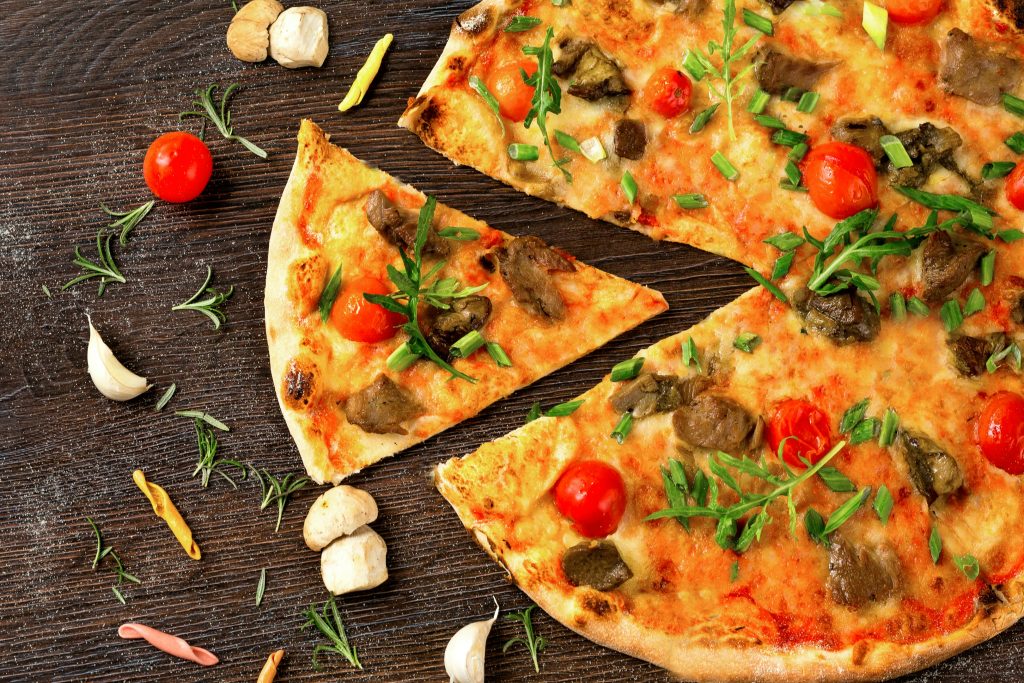

Yes, you can eat pizza on the Mediterranean diet, especially the kind you make at home or choose carefully. Pizza was born in Naples and, at its simplest, is bread, tomato, olive oil, a little cheese and herbs. What moves it away from the Mediterranean pattern is a thick refined crust, lots of cheese and processed meats, and eating it often in large portions.
This guide shows how to make pizza fit: the best crusts and toppings, how often to have it, smart choices when ordering out, and a simple homemade recipe.
Why traditional pizza can fit the Mediterranean diet
A classic Neapolitan margherita is a thin, simple pizza topped with tomato, a modest amount of fresh mozzarella, basil and a drizzle of olive oil. Those ingredients are all part of Mediterranean eating. The diet does not ban foods. It is a pattern built mostly on vegetables, legumes, whole grains, fish and olive oil, with room for occasional foods you enjoy.
What makes pizza less Mediterranean
- Thick, refined white crusts that provide a lot of refined carbohydrate and little fiber.
- Heavy cheese, especially stuffed crusts and extra cheese.
- Processed meats such as pepperoni, salami, ham and sausage, which the diet keeps to a minimum.
- Large portions, such as a whole large pizza for one person.
- The sides: garlic bread, fries, soft drinks and dessert.
How to build a Mediterranean-style pizza
| Part | Best choices |
|---|---|
| Crust | Thin crust; whole-wheat or part whole-wheat dough; or whole-grain flatbread, pita or a cauliflower base |
| Sauce | Simple tomato sauce with garlic and oregano, pesto, or just olive oil and garlic |
| Cheese | A modest amount of fresh mozzarella, feta, ricotta or a sprinkle of parmesan |
| Vegetables | Lots: spinach, peppers, onions, mushrooms, zucchini, eggplant, artichokes, olives, cherry tomatoes, rocket |
| Protein | Grilled chicken, prawns, anchovies, tuna, white beans or chickpeas |
| Finish | A drizzle of extra virgin olive oil and fresh basil, oregano or chili |
How often can you eat pizza?
Think of pizza as an occasional meal rather than a weekly staple, unless you make a vegetable-loaded homemade version, which can fit more often. A practical approach is to have one or two slices and fill the rest of your plate with a big salad dressed with olive oil.
Ordering pizza out: smarter choices
- Choose thin crust over deep-dish or stuffed crust.
- Order a margherita, marinara or vegetable pizza instead of meat-lovers.
- Ask for extra vegetables and less cheese.
- Share a pizza and add a side salad instead of garlic bread.
- Drink water or sparkling water.
Easy homemade Mediterranean pizza
Ingredients (2 servings)
- 2 whole-wheat pitas or flatbreads, or 250 g whole-wheat pizza dough
- 4 tbsp tomato passata mixed with 1 crushed garlic clove and dried oregano
- 60 g fresh mozzarella or crumbled feta
- 1 cup baby spinach, ½ red pepper and ¼ red onion, sliced
- 6 to 8 olives, a few artichoke hearts and cherry tomatoes
- Extra virgin olive oil, fresh basil and chili flakes
Method
- Heat the oven to 230°C (450°F) and preheat a tray.
- Spread the tomato sauce over the bases and top with vegetables, olives and cheese.
- Bake for 8 to 12 minutes until the edges are crisp.
- Finish with basil, a drizzle of olive oil and chili. Serve with a large green salad.
For more meal ideas, see our Mediterranean recipes for beginners and weekly meal plan. If you are wondering about other favorites, read pasta on the Mediterranean diet and the best breads for the Mediterranean diet.
Frequently asked questions
Is cauliflower crust pizza healthier?
It can be lower in refined carbohydrate, but many store-bought cauliflower crusts contain cheese and starches. A thin whole-wheat crust topped with plenty of vegetables is equally Mediterranean.
Can I eat pizza on the Mediterranean diet for weight loss?
Yes, if portions are reasonable. One or two slices of a thin, vegetable-topped pizza with a salad is a balanced meal. Frequent large pizzas make weight loss harder.
Is frozen pizza allowed?
Occasionally. Choose a thin-crust vegetable option, check the sodium, add extra vegetables before baking and serve it with a salad.

Recent Comments