
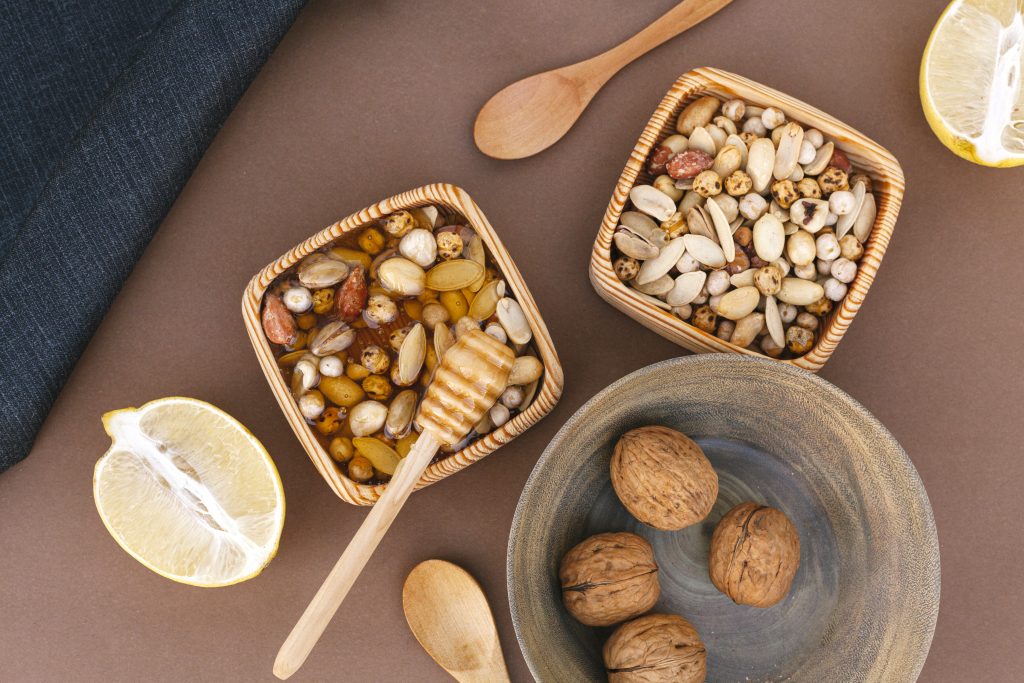

Good Mediterranean diet snacks are simple whole foods: fruit, a small handful of nuts, plain Greek yogurt, vegetables with hummus, olives, a boiled egg or a slice of whole-grain toast with olive oil and tomato. The best snacks combine fiber with some protein or healthy fat so they keep you full until your next meal, without the added sugar and refined flour of most packaged snacks.
How snacking works on the Mediterranean diet
Traditionally, people in Mediterranean countries snack less than many of us do, and meals are generous and satisfying. When you do snack, treat it as a mini-meal of real food rather than something from a packet. Aim for around 150 to 250 calories, and pair a fiber-rich food with protein or healthy fat.
15 Mediterranean diet snack ideas
| Snack | Why it works |
|---|---|
| Plain Greek yogurt with berries and walnuts | Protein, fiber and healthy fats |
| Hummus with carrot, cucumber and pepper sticks | Legume protein and fiber |
| A small handful (about 30 g) of almonds, walnuts or pistachios | Healthy fats and protein |
| An apple or pear with a spoon of nut butter | Fiber and fat for staying power |
| Olives with a few cubes of feta | Savory, satisfying, classic Mediterranean |
| Boiled egg with cherry tomatoes | Protein and freshness |
| Whole-grain toast with olive oil, tomato and oregano | A Spanish-style pan con tomate |
| Roasted chickpeas with paprika | Crunchy, high-fiber alternative to chips |
| A few dates or dried figs with almonds | Natural sweetness balanced with protein |
| Tzatziki with whole-grain pita | Yogurt protein plus fiber |
| Sardines on whole-grain crackers | Omega-3s and calcium |
| Fresh figs or grapes with a little cheese | Simple Mediterranean pairing |
| Edamame or white bean dip | Plant protein |
| A small bowl of lentil or vegetable soup | Warm and filling |
| Dark chocolate (70%+) with a few walnuts | An occasional treat |
Portion guide
- Nuts: about 30 g (a small handful, roughly 20 almonds).
- Olives: 8 to 10.
- Cheese: 30 g, about the size of a matchbox.
- Hummus: 3 to 4 tablespoons.
- Dried fruit: 2 to 3 pieces.
Snacks to keep occasional
- Chips, crackers and pretzels made from refined flour
- Biscuits, pastries and muffins
- Sweetened yogurts and granola bars with added sugar
- Candy and sugary drinks
Snacks for specific goals
For weight loss
Choose high-volume, lower-calorie snacks: vegetables with hummus, fruit, or plain yogurt. Measure nuts and dried fruit. See how to lose weight on the Mediterranean diet.
For steady blood sugar
Pair carbohydrates with protein or fat, for example an apple with almonds or berries with yogurt.
Low-carb options
Olives, cheese, nuts, boiled eggs and vegetables with tzatziki. See our Mediterranean keto snacks.
Make-ahead snack prep
- Wash and cut vegetables on Sunday and store them in water in the fridge.
- Make a batch of hummus or tzatziki.
- Portion nuts into small containers.
- Boil 4 to 6 eggs for the week.
- Roast a tray of chickpeas.
Frequently asked questions
Is popcorn a Mediterranean snack?
Plain air-popped popcorn tossed with a little olive oil and herbs is a whole-grain snack that fits well. Skip butter-heavy and sugary versions.
Are protein bars allowed?
Most are highly processed. Whole-food snacks like yogurt, eggs or nuts are a better fit.
What is a good bedtime snack?
Something light like yogurt, a few nuts or a piece of fruit. See Mediterranean bedtime snacks.

Recent Comments