

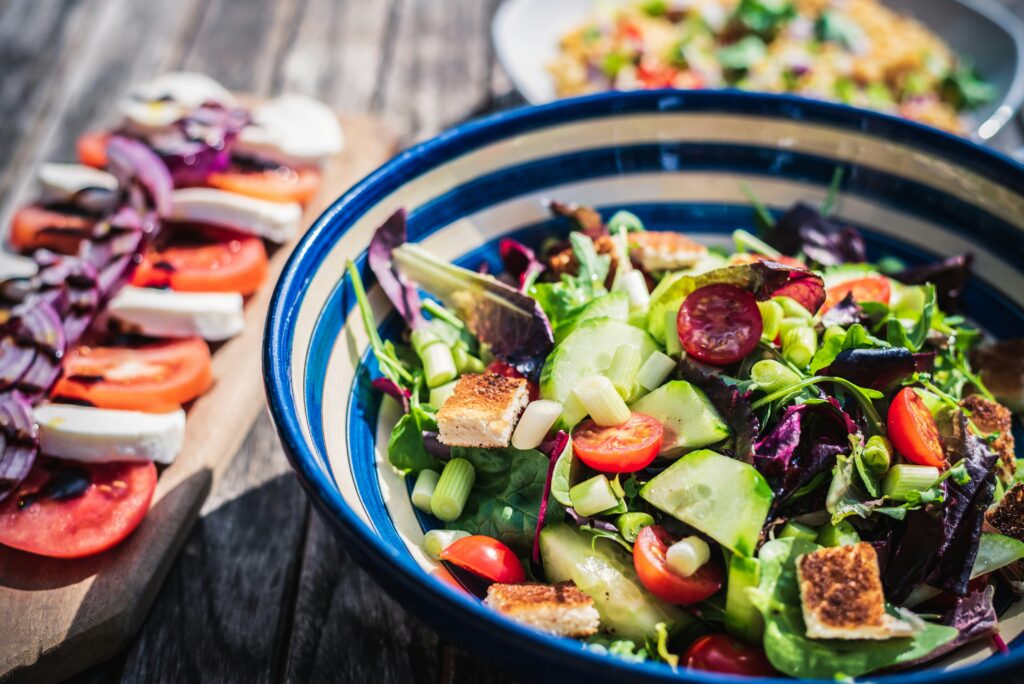

Adopting a Mediterranean diet is a fantastic way to improve your overall health while enjoying delicious and nutritious foods. This diet, inspired by the traditional eating habits of Mediterranean countries, is renowned for its benefits in reducing the risk of heart disease, diabetes, and certain cancers. To help you get started, here are the top 10 foods to include in your Mediterranean diet for a healthier and more flavorful lifestyle.
1. 🫒Olive Oil
A cornerstone of the Mediterranean diet, olive oil is rich in monounsaturated fats and antioxidants. It’s excellent for cooking or as a base for salad dressings, offering heart-healthy benefits.
2. 🍅Tomatoes
Tomatoes are packed with vitamins, minerals, and the powerful antioxidant lycopene, which has been linked to a reduced risk of cancer and heart disease. Enjoy them fresh, in sauces, or roasted.
3. 🥜Nuts and Seeds
Almonds, walnuts, chia seeds, and flaxseeds are nutrient-dense and provide healthy fats, protein, and fiber. They make for great snacks or additions to salads and yogurt.
4. 🥬Leafy Greens
Spinach, kale, arugula, and other leafy greens are low in calories but high in vitamins, minerals, and fiber. They support overall health and can be used in salads, soups, or as side dishes.
5. 🐟Fish
Fatty fish like salmon, mackerel, and sardines are rich in omega-3 fatty acids, which are essential for heart health. Aim to include fish in your meals at least twice a week.
6. 🫘Legumes
Beans, lentils, and chickpeas are excellent plant-based protein sources, rich in fiber and important minerals. They are versatile and can be used in soups, stews, salads, and dips like hummus.
7. 🌾Whole Grains
Whole grains such as quinoa, brown rice, barley, and whole wheat pasta provide essential nutrients and fiber, promoting digestive health and sustained energy levels.
8. 🫐Berries
Berries like strawberries, blueberries, and raspberries are loaded with antioxidants, vitamins, and fiber. They’re perfect for snacking, adding to yogurt, or blending into smoothies.
9. 🫙Greek Yogurt
Greek yogurt is higher in protein and lower in sugar than regular yogurt. It’s a great source of calcium and probiotics, which are beneficial for gut health.
10. 🌶️Herbs and Spices
Fresh and dried herbs like basil, oregano, rosemary, and thyme add flavor to dishes without extra calories or sodium. They also have various health benefits due to their antioxidant properties.
Incorporating these top 10 foods into your Mediterranean diet can enhance your overall health and add variety to your meals. Enjoy the delicious and nutritious offerings of the Mediterranean lifestyle!

Recent Comments