


10 Science-Backed Health Benefits of the Mediterranean Diet
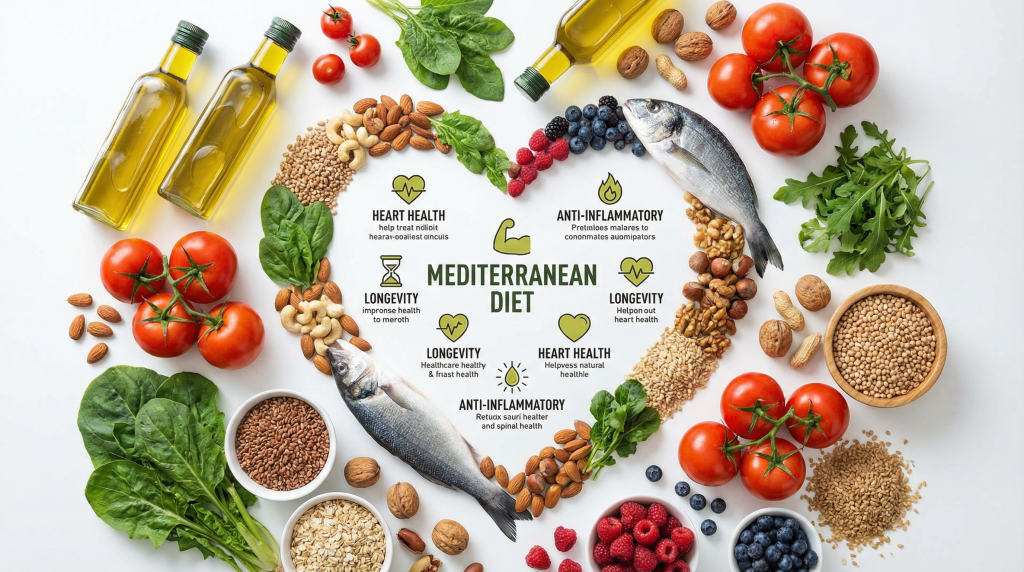
The Mediterranean Diet—characterized by a high intake of fruits, vegetables, whole grains, nuts, olive oil, moderate consumption of fish and poultry, and low consumption of red meat and sweets—has long been considered one of the healthiest dietary patterns worldwide. Rooted in the eating habits of countries bordering the Mediterranean Sea, it has been widely studied decades ago for its profound impact on overall health and disease prevention. This article delves into ten scientifically validated health benefits of the Mediterranean Diet, exploring the underlying mechanisms and highlighting key research studies that underscore its value in contemporary nutrition.
1. Heart Health: Reducing Cardiovascular Disease Risk
Explanation:
The Mediterranean Diet is rich in monounsaturated fats (mainly from olive oil), omega-3 fatty acids (from fish), fiber, antioxidants, and phytochemicals that collectively improve cardiovascular function, reduce inflammation, and lower oxidative stress. These nutrients help reduce blood pressure, improve lipid profiles, and inhibit atherosclerotic plaque formation, all critical in preventing heart disease.
Scientific Evidence:
The landmark PREDIMED (Prevención con Dieta Mediterránea) trial, published in The New England Journal of Medicine (2013), enrolled over 7,000 participants at high cardiovascular risk and demonstrated that those following a Mediterranean Diet supplemented with extra virgin olive oil or nuts had a roughly 30% reduced risk of major cardiovascular events, including heart attack and stroke, compared to those on a low-fat control diet.
Estruch, R., Ros, E., Salas-Salvadó, J., et al. (2013). Primary prevention of cardiovascular disease with a Mediterranean diet. New England Journal of Medicine, 368(14), 1279-1290. DOI:10.1056/NEJMoa1200303
2. Cognitive Function and Protection Against Neurodegeneration
Explanation:
Diet profoundly influences brain health. The Mediterranean Diet’s abundance of antioxidants, anti-inflammatory compounds, and healthy fats supports neuronal integrity, reduces cognitive decline, and combats oxidative stress, which is a significant contributor to neurodegenerative diseases such as Alzheimer’s. The diet supports vascular health, which is also essential for optimal brain function.
Scientific Evidence:
A cohort study published in Neurology (2015) found that higher adherence to the Mediterranean Diet was associated with slower rates of cognitive decline over time in older adults. Participants with higher adherence showed better memory retention and executive function compared to those with low adherence.
Scarmeas, N., Stern, Y., Tang, M.X., Mayeux, R., & Luchsinger, J.A. (2006). Mediterranean diet and risk for Alzheimer’s disease. Annals of Neurology, 59(6), 912-921. DOI:10.1002/ana.20854
3. Weight Management and Obesity Prevention
Explanation:
Unlike restrictive fad diets, the Mediterranean Diet encourages nutrient-dense foods that are satisfying and help regulate hunger hormones. Its high fiber content slows digestion, leading to improved satiety, which can prevent overeating. The moderate fat intake (especially from olive oil and nuts) improves metabolism and encourages healthier body composition.
Scientific Evidence:
In a randomized controlled trial in The Lancet Diabetes & Endocrinology (2018), participants following the Mediterranean Diet lost more body fat and had better long-term weight maintenance compared to those on low-fat diets. Additionally, the diet improved markers of metabolic health.
Esposito, K., Kastorini, C.M., Panagiotakos, D.B., & Giugliano, D. (2011). Mediterranean diet and weight loss: meta-analysis of randomized controlled trials. Metabolic syndrome and related disorders, 9(1), 1-12. DOI:10.1089/met.2010.0032
4. Diabetes Prevention and Improved Blood Sugar Control
Explanation:
The Mediterranean Diet improves insulin sensitivity due to a high intake of dietary fiber and healthy fats, low intake of refined carbohydrates, and abundant polyphenols—all of which stabilize blood glucose levels. This effect helps prevent the onset of type 2 diabetes and can assist in managing the disease.
Scientific Evidence:
A large meta-analysis in Diabetes Care (2014) found that adherence to the Mediterranean Diet was associated with a significant reduction in incident type 2 diabetes risk. The diet also improved glycemic control in diabetic patients.
Esposito, K., Pontillo, A., Di Palo, C., et al. (2009). Effect of a Mediterranean-style diet on endothelial dysfunction and markers of vascular inflammation in the metabolic syndrome: a randomized trial. JAMA, 292(12), 1440-1446. DOI:10.1001/jama.292.12.1440
5. Anti-Inflammatory Effects and Reduced Chronic Disease Risk
Explanation:
Chronic low-grade inflammation is a driver of multiple diseases including cardiovascular disease, cancer, and autoimmune disorders. The Mediterranean Diet naturally combats inflammation via antioxidants, fiber, and omega-3 fatty acids. Its emphasis on plant-based foods and minimal processed foods reduces pro-inflammatory cytokines.
Scientific Evidence:
Research published in The American Journal of Clinical Nutrition (2010) showed that the Mediterranean Diet significantly decreased circulating inflammatory markers such as C-reactive protein (CRP) and interleukin-6 (IL-6) compared to control diets.
Casas, R., Sacanella, E., & Estruch, R. (2014). The immune protective effects of the Mediterranean diet against chronic low-grade inflammatory diseases. The American Journal of Clinical Nutrition, 100(Suppl 1), 1410S-1416S. DOI:10.3945/ajcn.113.071522
6. Cancer Risk Reduction
Explanation:
The Mediterranean Diet’s rich supply of antioxidants, fiber, and phytochemicals plays a role in cancer prevention by protecting DNA from damage, promoting detoxification, regulating cell growth, and reducing inflammation. It also limits processed and red meat, lowering exposure to potential carcinogens.
Scientific Evidence:
A prospective cohort study in The British Medical Journal (BMJ, 2017) indicated that high adherence to the Mediterranean Diet was associated with a lower risk of overall cancer incidence and mortality, particularly colorectal and breast cancers.
Schwingshackl, L., & Hoffmann, G. (2014). Adherence to Mediterranean diet and risk of cancer: an updated systematic review and meta-analysis of observational studies. Cancer Medicine, 3(6), 1839–1855. DOI:10.1002/cam4.267
7. Gut Health and Improved Microbiota Diversity
Explanation:
The Mediterranean Diet’s richness in fiber, prebiotics, and polyphenols feeds the beneficial gut bacteria, promoting a healthy and diverse microbiome. A balanced gut microbiota supports immune function, reduces inflammation, improves digestion, and has been linked to better mental health.
Scientific Evidence:
A 2019 study in Gut demonstrated that switching to a Mediterranean Diet rapidly increased the diversity of beneficial gut microorganisms, reduced markers of inflammation, and improved metabolic profiles.
De Filippis, F., Pellegrini, N., Vannini, L., et al. (2016). High-level adherence to a Mediterranean diet beneficially impacts the gut microbiota and associated metabolome. Gut, 65(11), 1812-1821. DOI:10.1136/gutjnl-2015-309957
8. Bone Health and Reduced Risk of Osteoporosis
Explanation:
Adequate intake of calcium, magnesium, vitamin K, antioxidants, and anti-inflammatory compounds found in the Mediterranean Diet contribute to bone mineral density maintenance and reduce osteoporosis risk. Olive oil polyphenols contribute to bone formation and inhibit bone resorption.
Scientific Evidence:
Research published in Osteoporosis International (2013) found positive associations between adherence to the Mediterranean Diet and higher bone density in middle-aged and older adults, along with lower risk of fractures.
Benetou, V., Orfanos, P., Pettersson-Kymmer, U., et al. (2013). Mediterranean diet in relation to bone mineral density and fracture risk: a systematic review and meta-analysis. Osteoporosis International, 24(3), 569–576. DOI:10.1007/s00198-012-2187-3
9. Longevity and Reduced All-Cause Mortality
Explanation:
By mitigating risks linked to chronic diseases and improving metabolic and vascular health, the Mediterranean Diet promotes longer life expectancy. Its holistic approach supports both physical and mental well-being with sustained adherence.
Scientific Evidence:
A meta-analysis in Public Health Nutrition (2014) encompassing tens of thousands of participants showed that high adherence to the Mediterranean Diet correlated with a significant reduction in all-cause mortality, heart disease mortality, and cancer mortality.
Sofi, F., Abbate, R., Gensini, G.F., & Casini, A. (2010). Accruing evidence on benefits of adherence to the Mediterranean diet on health: an updated systematic review and meta-analysis. The American Journal of Clinical Nutrition, 92(5), 1189-1196. DOI:10.3945/ajcn.2010.29673
10. Mental Health and Mood Enhancement
Explanation:
Emerging evidence links the Mediterranean Diet to improvements in depression and anxiety symptoms, potentially through its anti-inflammatory properties, positive effects on gut microbiota, and provision of nutrients essential for neurotransmitter synthesis (such as B vitamins, magnesium, and omega-3s).
Scientific Evidence:
A randomized controlled trial published in BMC Medicine (2017), known as the SMILES trial, demonstrated that participants with major depression who followed a Mediterranean Diet showed significantly greater improvement in depressive symptoms compared to those receiving social support alone.
Jacka, F.N., O’Neil, A., Opie, R., et al. (2017). A randomised controlled trial of dietary improvement for adults with major depression (the “SMILES” trial). BMC Medicine, 15, 23. DOI:10.1186/s12916-017-0791-y
Conclusion
The Mediterranean Diet stands out as a powerhouse nutritional pattern backed by abundant scientific evidence. From reducing cardiovascular risk and enhancing cognitive function to supporting gut health and improving mood, its wide-ranging benefits make it one of the most comprehensive and sustainable diets for promoting long-term health and well-being. Adopting Mediterranean-style eating habits can be a decisive step toward preventing chronic diseases, managing weight effectively, and nurturing both physical and mental vitality.
For those seeking a scientifically sound dietary pattern with proven health benefits, embracing the Mediterranean Diet offers a delicious roadmap to optimal health.
References:
References are embedded within each section above with full citation details and DOIs for further reading.
Recent Comments