

We all want better health, more energy, and a happier relationship with food 😌. But sometimes, the solution isn’t complicated—it’s surprisingly simple. One habit in particular, embraced by Mediterranean cultures, can transform the way you eat and feel every day.
🍽️ Eat Mindfully, Not Mindlessly
The simple habit? Mindful eating. This means paying attention to your food—its taste, texture, aroma, and how it makes you feel—rather than eating while distracted by phones, TV, or work 📱🍿.
Why does this make such a difference? Mindful eating helps you:
- Recognize hunger and fullness cues 🥗
- Enjoy meals more 😋
- Reduce overeating and snacking out of habit 🚫
- Improve digestion and nutrient absorption 🌿
When you slow down and focus on your food, your body can naturally tell you when you’re satisfied. No counting calories, no strict rules—just paying attention.
🫒 How the Mediterranean Diet Does It
The Mediterranean diet is famous for fresh vegetables, fruits, olive oil, fish, legumes, and whole grains 🥦🍅🐟. But what sets it apart isn’t just what you eat—it’s how you eat.
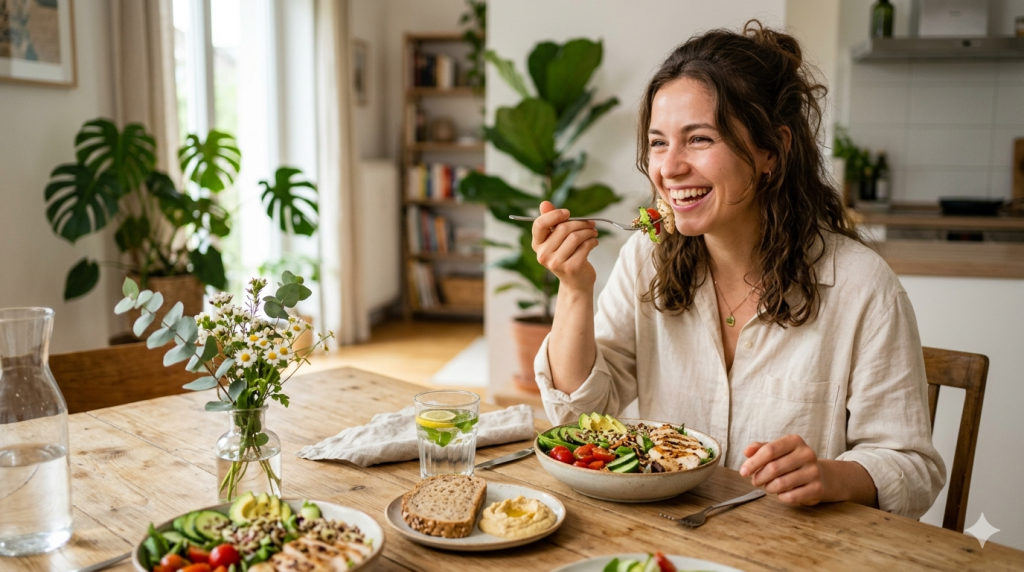
In Mediterranean cultures, meals are often shared with family or friends 👨👩👧👦. People eat slowly, savoring each bite and enjoying conversation. This naturally encourages mindful eating:
- You notice flavors more 🌶️
- You feel satisfied with smaller portions 🍽️
- You connect with others, reducing stress and emotional eating ❤️
Even small changes, like putting down your phone or chewing slowly, can shift your entire eating experience.
🥗 Tips to Start Mindful Eating Today
- Sit at the table – Avoid eating on the go. Make it a real meal.
- Engage your senses – Notice colors, textures, smells, and flavors.
- Chew slowly – Aim for 20–30 chews per bite to aid digestion.
- Pause between bites – Ask yourself if you’re still hungry.
- Enjoy company – Share meals with friends or family whenever possible.
✨ Why It Works
Mindful eating doesn’t just improve digestion or weight management—it changes your relationship with food. Meals become nourishing and enjoyable, not stressful. Over time, this habit supports better health, higher energy levels ⚡, and even emotional well-being 😌.
🌿 The Bottom Line
You don’t need a perfect diet or extreme rules to see results. Start with one simple habit: eat mindfully. Focus on your food, savor each bite, and enjoy the moment.
By combining mindful eating with wholesome Mediterranean foods, you’re giving your body the fuel it needs—and creating a lifestyle that’s sustainable, joyful, and health-promoting 🫒✨.
Healthy eating doesn’t have to be complicated. Sometimes, slowing down is all it takes.

Recent Comments